U.S.-Sanctioned United Front Figure Leads World Data Organization
Executive Summary:
- The World Data Organization (WDO), a new international institution, launched in Beijing in March. Limited information is publicly available regarding its claimed global membership or its institutional design but it is intended to advance the Chinese Communist Party’s global governance agenda.
- The WDO’s president, Tan Tieniu, is a world-leading expert in surveillance technologies for public security applications. The U.S. government sanctioned him in 2021 for his role in the Hong Kong government. Tan is also deeply involved in the Party’s united front work and has been a delegate to at least four national Party congresses.
- Articles by Tan and others outline a vision of global data governance that explicitly pushes back on the United States and the West, which Tan accuse of exacerbating “fragmentation and imbalance.”
- The WDO is currently seeking to establish itself as a global platform for CCP influence. A United Nations representative delivered remarks at its founding event and its vice president—a former Party Secretary of China Mobile—wants it to work closely with the International Telecommunication Union and the World Intellectual Property Organization.
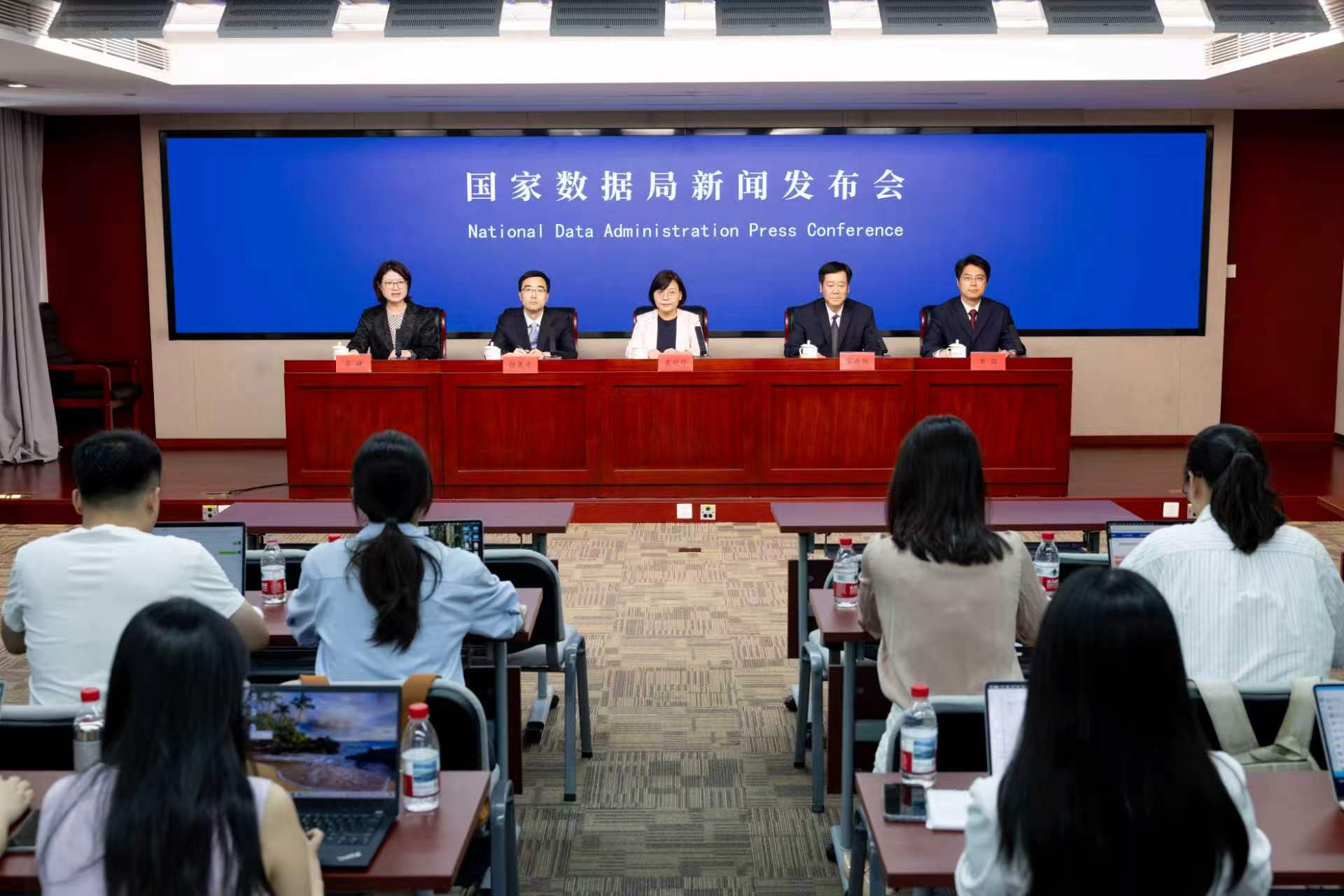
At the end of March, Chinese state media announced the establishment of a new global governance institution, the World Data Organization (WDO; 世界数据组织), headquartered in Beijing. The top of the People’s Daily front page reported that Chinese Communist Party (CCP) General Secretary Xi Jinping had penned a congratulatory letter that Politburo Standing Committee member Ding Xuexiang (丁薛祥) had read out at the organization’s founding conference. Ding called it “a major event” (一件大事) and declared that Xi’s letter, which said the WDO would “provide a valuable platform for … improving global data governance” (为 … 完善全球数据治理提供了有益平台), demonstrated the country’s “high expectations” (殷切期望) for the WDO (People’s Daily, March 31, [a], [b]).
Publicly available information about the WDO currently tells a different story. Although official coverage claimed that around 500 people attended the founding conference, and that the WDO has more than 200 members from over 40 different countries representing 14 major industries, no publicly available evidence supports these claims (CCTV, March 30). [1] Xinhua merely reports that these members are “entities and individuals related to the global data sector” (由全球数据领域相关单位及个人自愿结成的) (Xinhua, March 30). Reporting also notes a founding declaration was released at the event, though this, too, is not yet public (Xinhua, March 30). As of publication, the only acknowledged member of the WDO appears to be Jack Perry, Chairman of the 48 Group Club. The 48 Group Club is a London-based company formed in 1954 by members of the Communist Party of Great Britain. Its “mission statement” includes a nod to Zhou Enlai (周恩来), who the group’s website refers to as “China’s much-loved Premier” (48 Group Club, accessed June 12). [2]
WDO Promotes Party Preferences in Cyberspace
The WDO almost immediately cultivated a sense of international imprimatur that looks to be premature. Although it appears to present itself as an international institution, its leadership and characterizations of its intended role in state media show that it is an unusually obvious vehicle for enhancing CCP—rather than purely PRC—influence. In light of this, the decision of the United Nations (UN) Commission on Science and Technology for Development and vice chair of the UN Data Governance Working Group Muhammadou M.O. Kah to deliver remarks at the WDO’s inaugural event likely should be interrogated (Xinhua, March 31).
Attempts to access the WDO’s website (thewdo.org) currently redirects to a “Coming Soon” placeholder (thewdo.org/ComingSoon), but still allows the home page to be briefly visible. A capture of the home page shows that it contains the opening lines of the organization’s “founding declaration” (成立宣言), which includes calls to “strengthen industrial collaboration, jointly build data infrastructure, advance the development of standards and joint innovation, and promote the secure and trustworthy flow of data” (加强产业协同,共建数据基础设施,推进标准研制与联合创新,推动数据安全可信流动与资源开发利用). It also presents the organization’s priorities. These are extensive, but include working on development plans; handling issues among members and mediating disputes; building unified repositories for relevant regulations, technologies, experts, enterprises, tools, and resources; organizing and conducting policy research and data evaluation and testing; setting international standards and providing certification services; driving the construction of critical data service infrastructure and open-source ecosystems, and cultivating data application scenarios, among other far-reaching tasks (WDO, accessed June 12). [3]
The limited information that can be extracted from the WDO website, which is yet to launch, is a sanitized version of what appears in Party media. A recent article by Cheng Haiye (程海烨) of the Institute of International Studies, Shanghai Academy of Social Sciences sees the WDO as primarily supporting the CCP’s core security interests in the international arena. Despite later calling for promoting policy dialogues with the United States and Europe, he says, first of all, that the organization will “uphold the bottom line of security” (坚守安全底线) and support other countries’ data sovereignty. He then lists a number of items that the organization is there to oppose that indicate, implicitly but unequivocally, that the organization is targeted as an anti-Western institution: “data hegemony, bloc confrontation, and ‘long-arm jurisdiction’” (数据霸权、阵营对抗与“长臂管辖”). The article also makes clear that Cheng views the WDO as in line with Xi Jinping’s comprehensive national security concept, his proposed Global Data Security Initiative, and efforts to build a community of common destiny in cyberspace (Shanghai Academy of Social Sciences, June 3).
More telling is a commentary that appeared on the theory page of the People’s Daily on June 8. This piece was written by the WDO’s president (理事长), Tan Tieniu (谭铁牛). The piece is steeped in Party rhetoric, quoting Xi Jinping no fewer than seven times and intoning the appropriate Party formulas, referencing Xi’s four global initiatives and the community of common destiny. It also includes the same targeted rejection of the West, decrying “small yards and high fences” (小院高墙), data hegemony (数据霸权), and “data colonialism” (数据殖民主义). In this, he is more explicit than Cheng, despite his executive position in the WDO. He criticizes the United States for its “attempts to maintain digital hegemony under the guise of ‘digital freedom’” (美国以“数字自由”为名试图维持数字霸权地位) and the European Union for its influence on global standards, which he argues exacerbate “the fragmentation and imbalance in the global data governance landscape” (全球数据治理格局的分化与失衡进一步加剧) (People’s Daily, June 8).
Tan’s ambitions for the WDO are also clearly in line with CCP preferences. He writes that the organization will “help to further implement the [four] global governance initiatives” (有助于深入践行全球治理倡议) and “promote the development of the international order in a more just and equitable direction” (推动国际秩序朝着更加公正合理的方向发展), a common refrain that entails making the world safer for autocratic systems like the PRC’s (People’s Daily, June 8).
WDO Led by Senior United Front and Surveillance Tech Champions
Tan Tieniu is both an obvious and a disturbing choice to lead the WDO. An accomplished and internationally recognized scientist, Tan appears eminently capable of running such an organization. His longstanding involvement with the CCP’s united front system, and his extensive and groundbreaking research on surveillance technologies, however, are cause for alarm.
The most detailed account of his background appeared in a long profile published in CCP Members News in 2015. It charts his life’s story, from receiving a government scholarship to study at Imperial College London and taking up a tenured position at Reading University in the United Kingdom, to his rapid rise within the Chinese Academy of Sciences (CAS). He won multiple prestigious awards and accolades along the way, including being awarded the title of “National Outstanding Communist Party Member” (全国优秀共产党员) by the Central Committee on the Party’s 80th anniversary—one of only 50 recognized nationwide that time. The piece, although no doubt embellished for its propaganda value, conveys a strong sense of Tan’s support for the Party, which he joined in 1983, before he moved to the United Kingdom. Tan’s involvement with the united front system is extensive. His prior positions include
- Member of the Standing Committee of the All-China Youth Federation (全国青联常委);
- Vice Chairman of the All-China Youth Federation of Central Party and State Organs (中央国家机关青联副主席);
- Chairman of the CAS Youth Federation (中科院青年联合会主席);
- Vice President of the China Association for Young Scientists and Technologists (中国青年科技工作者协会副会长);
- Inaugural President of the All-China Youth Federation’s Association of Returned Overseas Students (全国青联留学人员联谊会首任会长).
He was also a delegate to the 16th, 17th, 18th, and 19th Party Congresses. His stature has only risen since then (People’s Daily Online/CCP Member News, July 27, 2015). Before taking on his new role, he was the Party Secretary of Nanjing University (Nanjing University, accessed June 12). While this is all indicative of his stellar CCP credentials, his other activities are much more concerning.
In 2021, the Biden administration in the United States sanctioned Tan Tieniu. At the time, he was one of seven deputy directors of the Liaison Office of the Central People’s Government of the Hong Kong Special Administrative Region, and so involved in the undermining of the Sino-British Joint Declaration (U.S. State Department, July 16, 2021).
Tan Tieniu’s research history suggests that he may have directly contributed to the state’s technological capabilities that have enabled an unprecedented apparatus of repressive social control. His published research has focused heavily on the ability of digital imaging to identify people via recognizing their gait or analyzing their irises and palmprints. He has received awards and grants for research that explicitly contributes to domestic security work. These include a grant for the years 2012–2016 to study “social perception data processing for public security” (面向公共安全的社会感知数据处理), third prize in the 2008 Beijing Municipal Science and Technology Progress Award for his work on “real-time intelligent video surveillance early warning system and application” (实时智能视频监控预警系统及应用), and second prize in the 2011 National Science and Technology Progress Award for his research into “video content understanding technology and applications for security surveillance” (面向安全监控的视频内容理解技术与应用) (Baidu/谭铁牛; Google Scholar/Tieniu Tan, accessed June 12).
Conclusion
The WDO, according to its vice president and secretary general (秘书长), former Party Secretary and Chairman of the China Mobile Communications Group Yang Jie (杨杰), wants to work closely with the International Telecommunication Union and the World Intellectual Property Organization to “jointly promote global data cooperation from rules discussions to standards alignment, application scenario implementation, and inclusive development” (共同推动全球数据合作从规则讨论走向标准衔接、场景落地和普惠发展) (Xinhua, March 30). If it succeeds in these ambitions, it will be a significant win for the Chinese Communist Party at the expense of the United States and its allies.
The WDO is yet to gain significant ground as a global institution, though it has already received a level of endorsement from the United Nations. The selection of a world-leading expert in human surveillance technologies, who is sanctioned by the U.S. government, and who views the organization as a vehicle to advance the CCP’s interests and explicitly to push back on the United States, however, suggests that the West has an interest in making sure it gains no further ground.
Notes
[1] The 14 industries are: industry, finance, healthcare, public services, e-commerce retail, transportation and logistics, energy, construction, internet, agriculture, education, media, automotive, and law. A webpage on Aiqicha (爱企查) claims that as of mid-May 2026, the organization had received “hundreds of membership applications worldwide, covering a total of 42 countries and regions, with corporate members accounting for over 76 percent” (已收到全球上百份会员申请,会员总数覆盖 42 个国家和地区,企业会员占比超过 76%) (Aiqicha, accessed June 12).
[2] Zhou Enlai was also the founder of CCP intelligence and deeply involved in overseas united front work. See: Mattis, Peter and Matthew Brazil, Chinese Communist Espionage: An Intelligence Primer (Naval Institute Press, 2019). Among his more horrific acts, in 1931 he directly ordered the massacre of the family of a former agent, which included a two-year-old child. See: Chen Jian, Zhou Enlai: A Life (Harvard University Press, 2024).
[3] There is an apparent separate Chinese website for the WDO (sjsjzz.com). This website, however, contains only a brief home page and looks suspiciously like it has been made by an AI model (WDO, accessed June 12).