Elite Fragmentation and Anxiety in the PLA
Elite Fragmentation and Anxiety in the PLA
Executive Summary:
- Self-inflicted wounds to the People’s Liberation Army (PLA) high command from frequent purges have undermined the PLA leadership’s decision-making capacity by substituting the collective wisdom of elite officers with the wits of one man.
- Political security and personal loyalty remain key concerns for General Secretary Xi Jinping. Given the PLA’s status as the most lethal institution in the People’s Republic of China—critical to ensuring Xi’s political longevity and future succession plans—he is likely to prioritize loyalty over competence in restaffing the CMC.
- The psychological effects of rolling purges cannot be ignored. The current crop of elite officers operates in a perilous environment marked by fear and anxiety. Officers are more likely to exercise self-censorship, distrust one another, and choose blind obedience over critical thinking. This will foster an echo chamber that ultimately sabotages the PLA’s effectiveness as a professional warfighting organization.
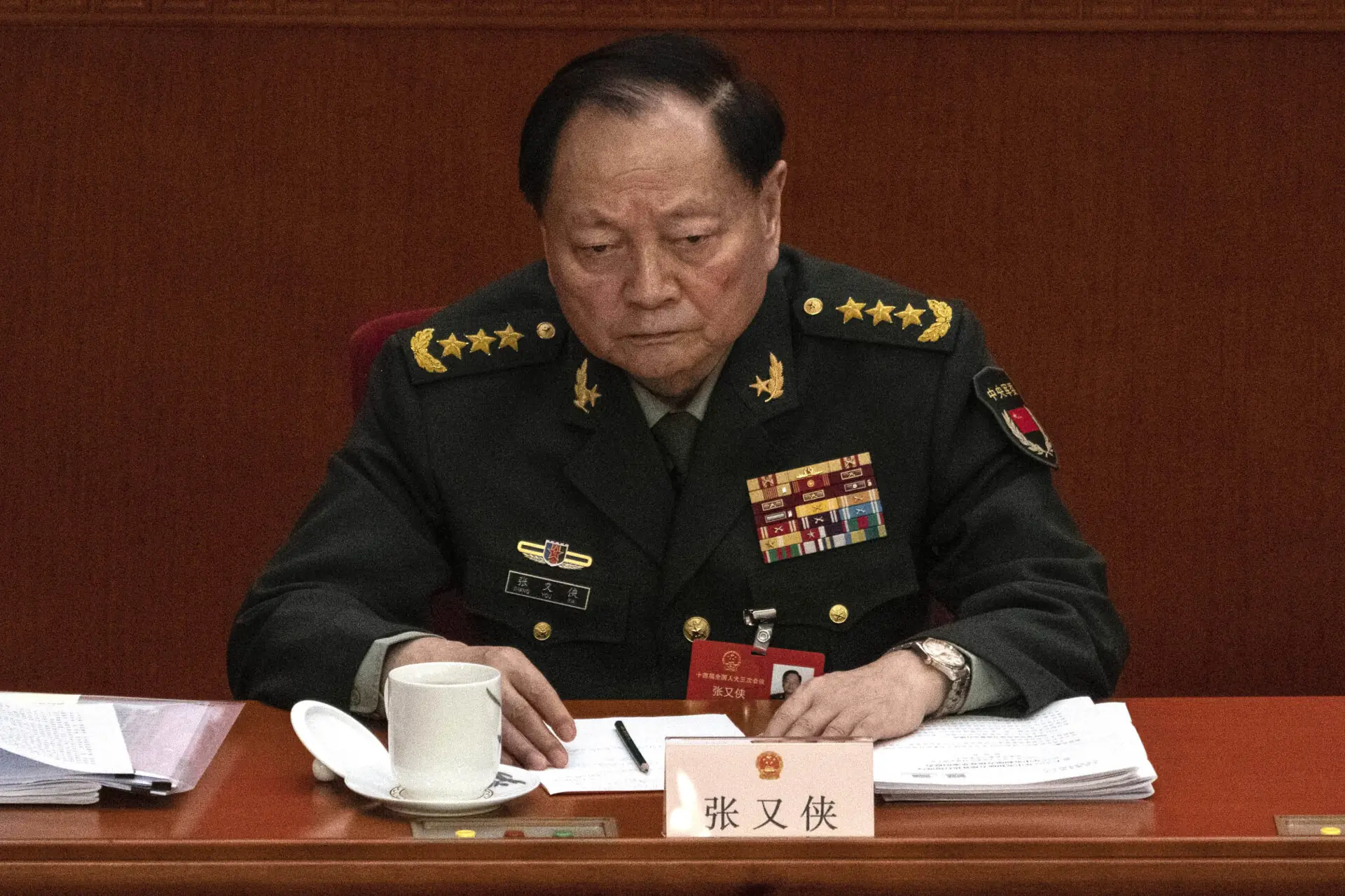
The military high command in the People’s Republic of China (PRC) is not in good shape. Two weeks after the purge of generals Zhang Youxia (张又侠) and Liu Zhenli (刘振立), the composition of the Central Military Commission (CMC) and its Joint Staff Department (JSD) remains uncertain. There have been no signs of new appointments to the CMC, and the position of JSD chief of staff remains vacant (Lianhe Zaobao, February 7).
This situation, in which it is unclear who is managing the People’s Liberation Army (PLA) on a day-to-day basis or advising CMC Chairman Xi Jinping on military affairs, is abnormal for any modern military. Yet it may persist until the next Party plenum later this year, which allows for new promotions, although acting members could be appointed in the interim. When Xi does move to repopulate the CMC, he is likely to elevate politically loyal officers who pose no threat. Even after that point, the negative impact of the current saga on elite officers will continue, as low morale and high mistrust are set to endure.
CMC and JSD Remain Operationally Significant
The crippling of CMC and JSD leadership is concerning precisely due to the centrality of these organizations in daily PLA operations. First established nearly 100 years ago, the CMC remains the highest national defense decision-making body in the PRC (People’s Daily, June 16, 2016). During the Mao era, veteran revolutionaries staffed the CMC until their displacement during the chaos of the Cultural Revolution (Gu, 2019). [1] From the reform era up until Xi came to power, the CMC has been characterized by relative stability and regularized promotion patterns. Xi has since subverted these conventions. [2]
Before mid-January 2026, it was still possible that the CMC continued to function normally. Zhang and Liu—two seasoned professional officers with combat experience—were still in place to assist Xi. With them out of the picture, the CMC is arguably now in a state of dysfunction. The two remaining members, Xi Jinping and anti-corruption czar Zhang Shengmin (张升民), are not professionally trained military officers and it is beyond their capacity to make optimal decisions for the world’s largest military (The Diplomat, October 27, 2025). Xi has secured the CMC Chairman Responsibility System he has long desired, and power has become unprecedently concentrated in his hands (Breaking Defense, February 6; Sinocism, February 8). Yet without institutional checks, critical feedback, and honest military advice, such maximal centralization might not benefit the PLA in the long run.
The JSD is the PLA’s second most important institutional organ. Led by a chief of staff and several deputies, it comprises bureaus responsible for overseeing the PLA’s C4ISR system and executing CMC orders pertaining to military operations. [3] Thus, while the JSD is vital in a time of peace, its prominence is further magnified in a time of war. Since the purge of Liu Zhenli, it remains unclear how the JSD is currently functioning, or how it reports up to the CMC or Xi personally. Its planning, coordination, and advisory duties have almost certainly been disrupted.
Xi Prioritizes Loyalty Over Competence
It is impossible for any single person to run a large organization, let alone one comprising over two million personnel. Xi, already in charge of the Party-state, does not have the bandwidth to manage the PLA by himself, even with assistance from Zhang Shengmin. As a result, despite the enormous power he wields, Xi must soon re-staff the high command and delegate responsibilities accordingly.
The most important question going forward concerns the type of officers Xi is likely to promote, as these choices will directly impact the PLA’s future capabilities. The concept of “red and expert” (又红又专), a Mao-era formulation used to describe the gold standard for professionals as both technically competent and firmly committed to Maoist ideology, will likely influence such choices (Doyon & Yang, 2024). [4] This paradigm was especially rigid within the PLA, where many capable officers ended up sidelined or even purged due to perceived lack of deference to Maoist dogmas or to Mao himself (Engelsberg Ideas, January 26). [5]
As PLA politics increasingly exhibit Mao-era features, Xi may consider new promotions based on such criteria. Certainly, Xi would like to find capable officers who are also loyal to his Party line. Yet the inherent tension between disciplined professional modus operandi and unreserved personal loyalty makes perfectly balanced “red and expert” types uncommon. In the absence of ideal candidates, Xi is likely to prioritize loyal officers over the professionally capable, even at the expense of negative consequences for the PLA. [6]
The military remains the most potent coercive institution in the PRC, reinforcing the need for loyal command. This concern seems to be central to the recent purge. Official statements have blasted Zhang and Liu for challenging Xi’s authority, suggesting acute disagreements between Xi and the two veterans who represented the professional officer class (PLA Daily, January 25). It is plausible that this incident substantially eroded Xi’s confidence in professionally oriented commanders, strengthening his preference for loyalty above all else. Even if Xi leans more toward “expert” in positions that require highly competent professionals, such as the JSD chief of staff, he will likely compensate by tightening monitoring mechanisms to ensure obedience.
High Command Likely Growing Anxious
Purges are designed to enforce fear-based compliance, often demoralizing a team and prospective members. The rolling purges that have devastated the CMC are therefore bound to produce ripple effects on the psychology and behavior of individuals remaining at the high command. At present, the PLA top brass is likely in a state of anxiety. The fall of Zhang Youxia shows that personal safety is not guaranteed even for a fellow princeling and apparent childhood associate of Xi who served as his right-hand man for eight years (Straits Times, February 4). The fall of Liu Zhenli, meanwhile, illustrates that maintaining a low profile and focusing on professional military matters also offer no protection (China-Arms, June 2, 2024). In a resulting climate of fear, the safest course of action is to agree with Xi’s opinions and suppress professional judgement when it contradicts his views, devote more time to parsing political trends than pursuing professional enrichment, and downplay one’s strengths to avoid unnecessary attention.
Elite fragmentation also leads to intensifying interpersonal differences, adverse effects on jointness, and the rise of information silos. High-ranking officers will fear informants in their midst, or harbor concerns that frequent interactions could be interpreted as clique formation, an unforgivable offense in the Party-state system. A breakdown of interdependence among officers could lead to devastating consequences, since militaries are built on collective spirit (USNI, November 2021). When mistrust and wariness dominate interpersonal relationships, the officer corps will face growing challenges in functioning as a cohesive team.
Frequent purges also fundamentally alter the nature of relations between Xi and the high command. By inflating Xi’s authority while minimizing officers’ professional autonomy, the high command risks become an echo chamber without dissenting voices or critical feedback. Once a leader shows that he has a penchant to use purges as a problem-solving tool, subordinates are incentivized to avoid acts that might elicit a negative reaction. Professional officers are less likely to provide forthright advice and will consistently endorse Xi’s perspectives, even submitting distorted information to maintain goodwill. [7] The PRC’s own history offers a stark warning: the Great Leap Forward, which resulted in the deadliest famine in human history, was largely an outcome of previous political campaigns that silenced all dissent (Education about Asia, Winter 2012). Global military history is similarly littered with examples of leaders making misguided decisions after insulating themselves from honest criticisms (Brookings, April 2, 2025).
Conclusion
Just as the October 2025 purge constrained the leadership capacity of the Eastern Theater Command, the latest purge of the CMC will impair high-level decision-making affecting the whole PLA (China Brief, November 25, 2025). The new status quo is one where Xi wields unprecedented power while important institutions have been undermined. This highly imbalanced composition prioritizes Xi’s personal aptitude over the collective wisdom and expertise of senior military officers.
In selecting new military elites to refill the high command, the need for political security is likely to drive Xi toward opting for loyalty over expertise. But true security will be hard to achieve while the PLA’s officer class operates in an environment marked by regular purges, anxiety, frayed personal ties, and fundamentally altered relations between the CMC chairman and his subordinates. Instead, officers are less inclined to take initiative, camaraderie is fading, and blind obedience to the leader is creating an echo chamber that fosters overconfidence and miscalculation, eventually undercutting high-level decision-making capacity and overall PLA effectiveness.
Notes
[1] Gu, Anlin, ed. 2019. Zhongguo Gongchandang Lishi Zuzhi Jigou Cidian [Dictionary of Historical Organizations and Institutions of the Chinese Communist Party]. Chinese Communist Party History Publishing House & Party-Building Literature Publishing House, p. 480.
[2] In the reform period, in addition to the chairman and two vice chairmen, the CMC usually comprised four general departments heads, service chiefs, and the minister of national defense (Reform Data, September 1, 2002). China Brief has previously published on the shifting composition of the CMC in the 21st century (China Brief, January 17, 2025). Changes under Xi began in the 2012–2017 CMC, which saw two sitting members purged: JSD Chief of Staff Fang Fenghui (房峰辉) was sentenced to life imprisonment in 2019 and CMC Political Work Department Director Zhang Yang (张阳) committed suicide while under house arrest in November 2017 (People’s Daily, November 28, 2017; PRC Procuratorate, February 21, 2019). The current CMC has been devastated by successive purges (China Brief, July, 26 2025, October 17, 2025, November 14, 2025).
[3] Important C4ISR-relevant bureaus within the JSD are: Operations Bureau (作战局), Strategic and Campaign Training Bureau (战略战役训练局), Intelligence Bureau (情报局), Navigation Bureau (导航局), Information and Communications Bureau (信息通信局), Network and Electronic Bureau (网络电子局), Network Information Bureau (网络信息局), Battlefield Environment Support Bureau (战场环境保障局), and Military Supplies Bureau (军事需求局) (163, March 30, 2023). See also Miller, Frank, Tung Ho, Kenneth Allen, and Arran Hope, eds. The People’s Liberation Army as Organization Volume 3.0. Washington, D.C.: The Jamestown Foundation; Vienna: Exovera, 2025., p.34.
[4] Jérôme Doyon and Long Yang, “Shades of Red: Changing Understandings of Political Loyalty in the Chinese Communist Party, 1921–2021”, in Jérôme Doyon and Chloé Froissart, eds., The Chinese Communist Party: A 100-Year Trajectory, ANU Press, pp. 125-154, 2024.
[5] While there were many purges of military officers during the Mao era, one of the first major campaigns targeting capable commanders was the so-called “Anti-Dogmatism Struggle” (反教条主义斗争) of 1958. This campaign demoted highly accomplished, reform-minded officers, including Liu Bocheng (刘伯承), Su Yu (粟裕), Li Da (李达), Xiao Ke (萧克), and Song Shilun (宋时轮). Remarkably, Zhang Youxia’s father Zhang Zongxun (张宗逊) spearheaded personal attacks on some of these generals. See History of the People’s Liberation Army Writing Group, ed. Zhongguo Renmin Jiefangjun Junshi [History of the People’s Liberation Army]. Vol. 5. Military Science Press, 2010, pp. 167–173; Xiao Ke. Xiao Ke Huiyilu [Memoirs of Xiao Ke]. Liberation Army Press. 1997, p. 452.
[6] For more on the loyalty versus competence dilemma, see Mattingly, Daniel C. “How the Party Commands the Gun: The Foreign–Domestic Threat Dilemma in China.” American Journal of Political Science 68, no. 1 (2024): 227–42.
[7] This phenomenon is otherwise known as the Dictator’s Dilemma. See Putkaradze, Vakhtang, “The Dictator’s Dilemma: The Distortion of Information Flow in Autocratic Regimes and Its Consequences.” Physica. D, Vol. 462, June 2024.