Kremlin Struggles to Project Global Relevance Amid Peace Talks
Kremlin Struggles to Project Global Relevance Amid Peace Talks
Executive Summary:
- After inconclusive U.S.–Ukraine–Russia talks on February 17–18 in Geneva, Moscow is scrambling to keep U.S. attention. Washington extended sanctions on Russia for another year after the Kremlin offered frozen Russian assets to the “Board of Peace” and reportedly pitched $12 trillion in economic projects with the United States.
- Facing economic strain at home and battlefield setbacks in Donbas, the Kremlin is trying to project global relevance, including rhetorically supporting Cuba amid U.S. sanctions and joining naval exercises with the People’s Republic of China (PRC) and Iran in the Strait of Hormuz.
- Russia’s attempts to project global reach may expose its limited leverage beyond Ukraine, weakening Putin’s hand ahead of further peace talks. Moscow’s ability to delay or reshape diplomatic outcomes could narrow significantly as sanctions continue to impact Russia’s economy and military gains stall.
Moscow was not entirely satisfied with the absence of tangible progress in the trilateral U.S.–Ukraine–Russia peace talks in Geneva on February 17–18. Russian President Vladimir Putin may persist with his “military victory” war plan, but he also wants to keep the diplomatic attention of U.S. President Donald Trump, who wants to bring the war against Ukraine to an end. Putin dispatched his special envoy Kirill Dmitriev to Geneva with a thick portfolio of lucrative economic projects that Ukrainian President Volodymyr Zelenskyy alleges amounted to $12 trillion (Radio Svoboda, February 19). On February 19, however, Trump signed an order to prolong U.S. sanctions against Russia for another year, which will aggravate the Kremlin’s unfolding economic crisis (Riddle, February 16; Vedomosti, February 20). The Kremlin is aware that U.S. foreign policy focus ranges from the Caribbean Sea to the Gulf of Oman, and from Gaza to Taiwan, so it is trying to claim a role in all these regions.
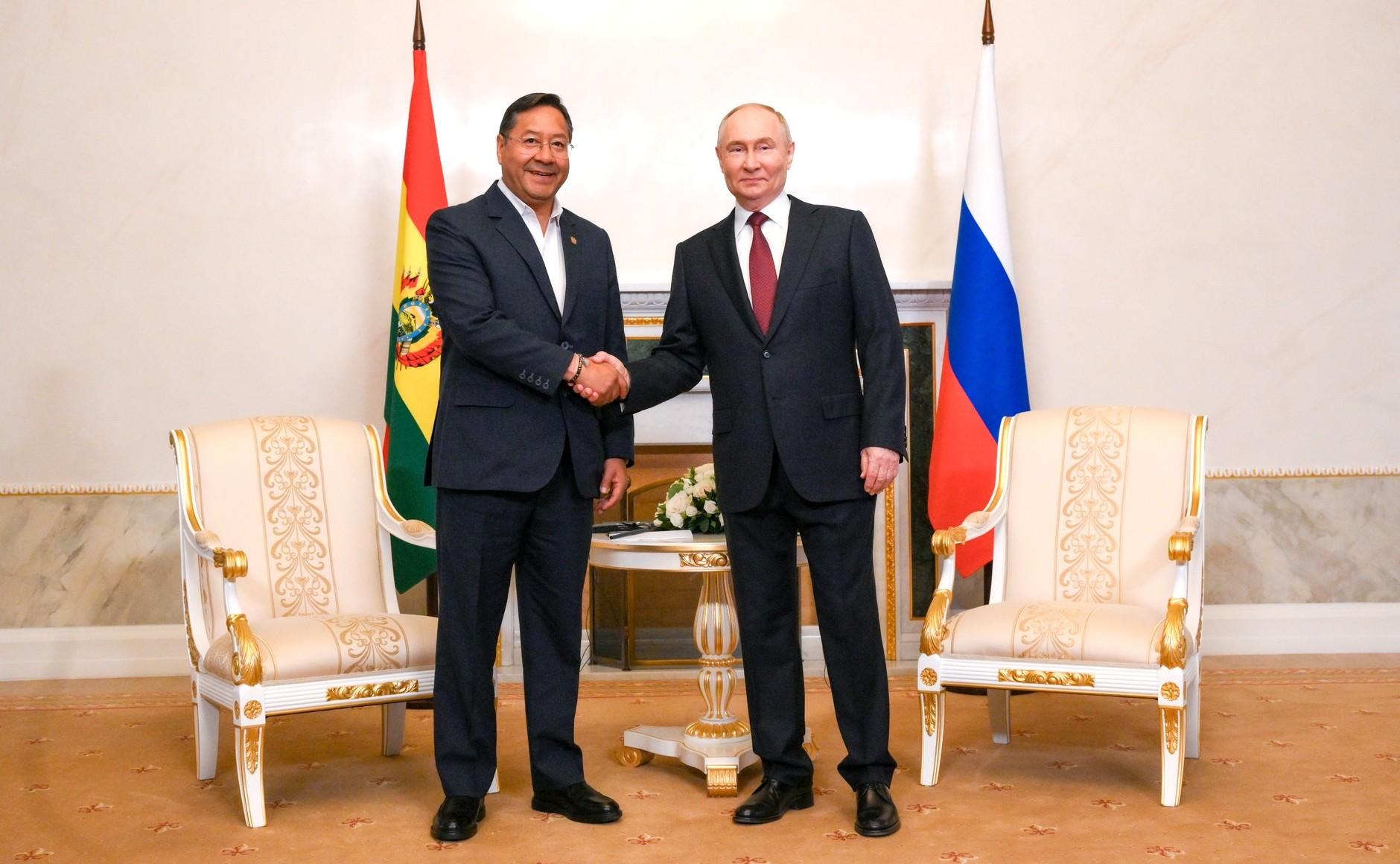
Cuban Foreign Minister Bruno Rodriguez Parrilla visited Moscow last week. Putin granted him an audience and a promise of support to ease the pain of “unacceptable” U.S. sanctions (Rossiiskaya Gazeta, February 18). This reassurance may not amount to much, as Russia cannot afford to Soviet-style bankroll client-states, particularly as ships of its “shadow fleet” are detained increasingly often, even by states such as Denmark (The Insider, February 19). Many Russians still harbor sympathy for Cuba, but as Russia faces its own economic crisis—when as much as 40 percent of the average family budget goes for buying food—foreign aid is not popular (Nezavismaya Gazeta, February 18).
Putin is also trying to make the case that Russia’s participation could make a difference in the success of the newly created Board of Peace (RBC, February 19). Seeking to use the Board of Peace to undermine U.S. sanctions, Putin offered to contribute $1 billion from frozen Russian assets in the United States (Kommersant, February 19). Moscow did not try to dissuade Central Asian states, namely Kazakhstan and Uzbekistan, from joining the Board of Peace, but the tone of commentary in mainstream Russian media on the inaugural summit in Washington D.C. on February 19 was skeptical (Izvestiya, February 20). Russia is particularly irritated by the suggestion that the Board of Peace would “look over” the United Nations, because Russia jealously guards its privilege of a permanent member of the UN Security Council (Kommersant, February 20).
Moscow is very concerned by U.S. military pressure on Iran and their bilateral talks. These talks are also taking place in Geneva and involve many of the same U.S. negotiators that worked on the trilateral U.S.–Ukraine–Russia discussions (Nezavisimaya Gazeta, February 18; Meduza, February 19). Putin is worried about the looming defeat of yet another “strategic partner” of Russia. The Russian public is largely ambivalent about mass protests in Iran (The Moscow Times, February 20). Mainstream Russian media emphasizes the risks of a limited U.S. strike on Iran, and pro-war “patriotic” commentators predict any U.S. military intervention is likely to fail (TopWar.ru, February 17; RIA Novosti, February 21).
Russian Foreign Minister Sergei Lavrov expressed Moscow’s support for a diplomatic solution in a phone conversation with the Iranian Foreign Minister Seyed Abbas Aragchi on February 20 (Telegram/@MID_Russia; TASS, February 20). Moscow is also adding some symbolic military support to Iran’s position (RBC, February 19). On February 17, the Stoikiy frigate from Russia’s Baltic Fleet made a port call to Bandar Abbas and did a joint exercise with the Iranian Navy (Interfax, February 19). On February 19, Russia’s Varyag cruiser led a squadron from the Pacific Fleet to partake in the joint Russia–Iran–People’s Republic of China (PRC) naval exercise, Maritime Security Belt 2026, in the Strait of Hormuz (Rossiiskaya Gazeta, February 19; RIA Novosti, February 20). These military exercises are duly noted by all concerned parties, but the presence of a Russian nuclear submarine did not prevent the January 7 capture of the Russian-flagged Marinera tanker—which the United States accuses of carrying sanctioned oil for Venezuela, Iran, and Russia—in the North Atlantic by the U.S. Coast Guard with U.K. support (Novaya Gazeta Evropa, January 8).
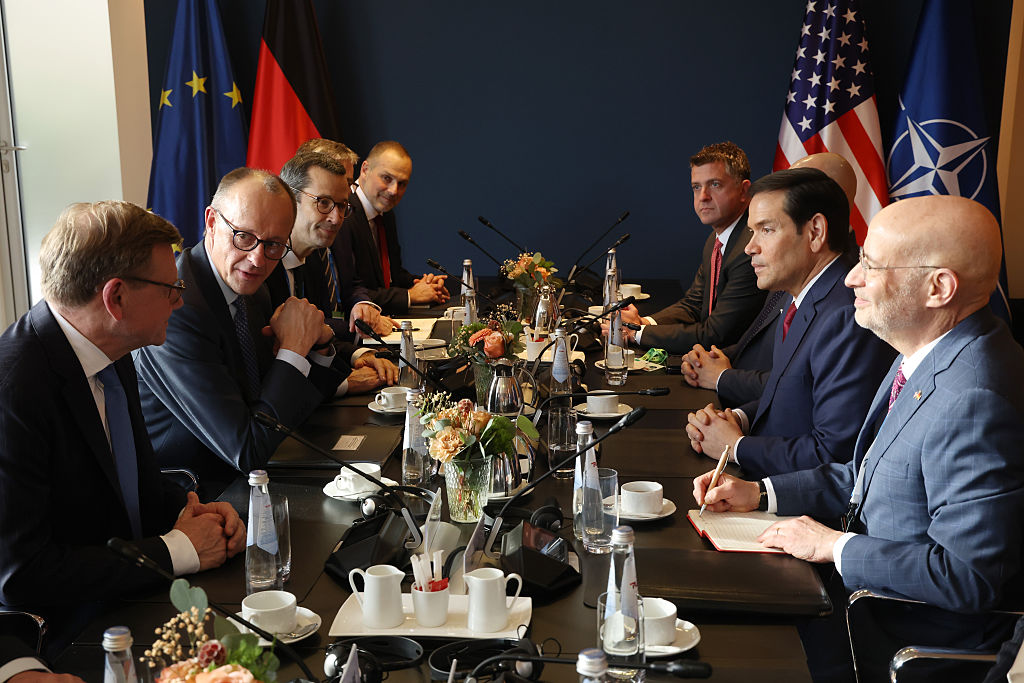
Russian attempts to demonstrate global reach would have been more convincing if they better coordinated with the PRC (RBC, February 14; Forbes.ru, February 19). Russian commentators offered few opinions on PRC Foreign Minister Wang Yi’s meeting with U.S. State Secretary Marco Rubio in Munich, but cannot fail to recognize the importance of Trump’s forthcoming visit to the PRC, while the dates and program for Putin’s state visit are not confirmed (Nezavisimaya Gazeta, February 18; Vedomosti, February 20). For that matter, the February 19 approach of two Russian Tu-95MS strategic bombers in international airspace near Alaska last week was a unilateral operation—reported in Russian media as an unconfirmed claim made by the North American Defense Command (NORAD)—and not a joint patrol with PRC bombers, as occurred elsewhere in December 2025 (TASS, February 20).
In the coming weeks before the next round of talks on peace for Ukraine, the feebleness of Russian leverage in other international conflicts is likely to become clear. Moscow has little to contribute to negotiations over international trade and tariffs, the regulation of information technologies, rebuilding Gaza, and Iran’s nuclear program. The exhaustion of relentless Russian attacks in Donbas and the hollowness of Putin’s claims of military dominance may also become clear. Since the start of February, Russia has lost more territory to Ukrainian counterattacks than it has gained at tremendous human cost. For the past year, Putin has managed to deflect the U.S. pressure to end his war against Ukraine, but Russia’s repertoire of procrastinations may be dwindling.