New Quality Combat Forces Underpin Military Modernization
Executive Summary:
- “New quality combat forces,” which refers to the integration of emerging technologies with military capabilities, are increasingly important to Chinese military modernization, according to authoritative policy documents and commentaries in Party media.
- The concept is important to the Party’s attempts to design a national system that fuses economic progress and military strength into an overarching “national strategic system and capabilities.”
- Technological progress is undermined by ongoing issues within the People’s Liberation Army, such as corruption, political unreliability, and governance issues.
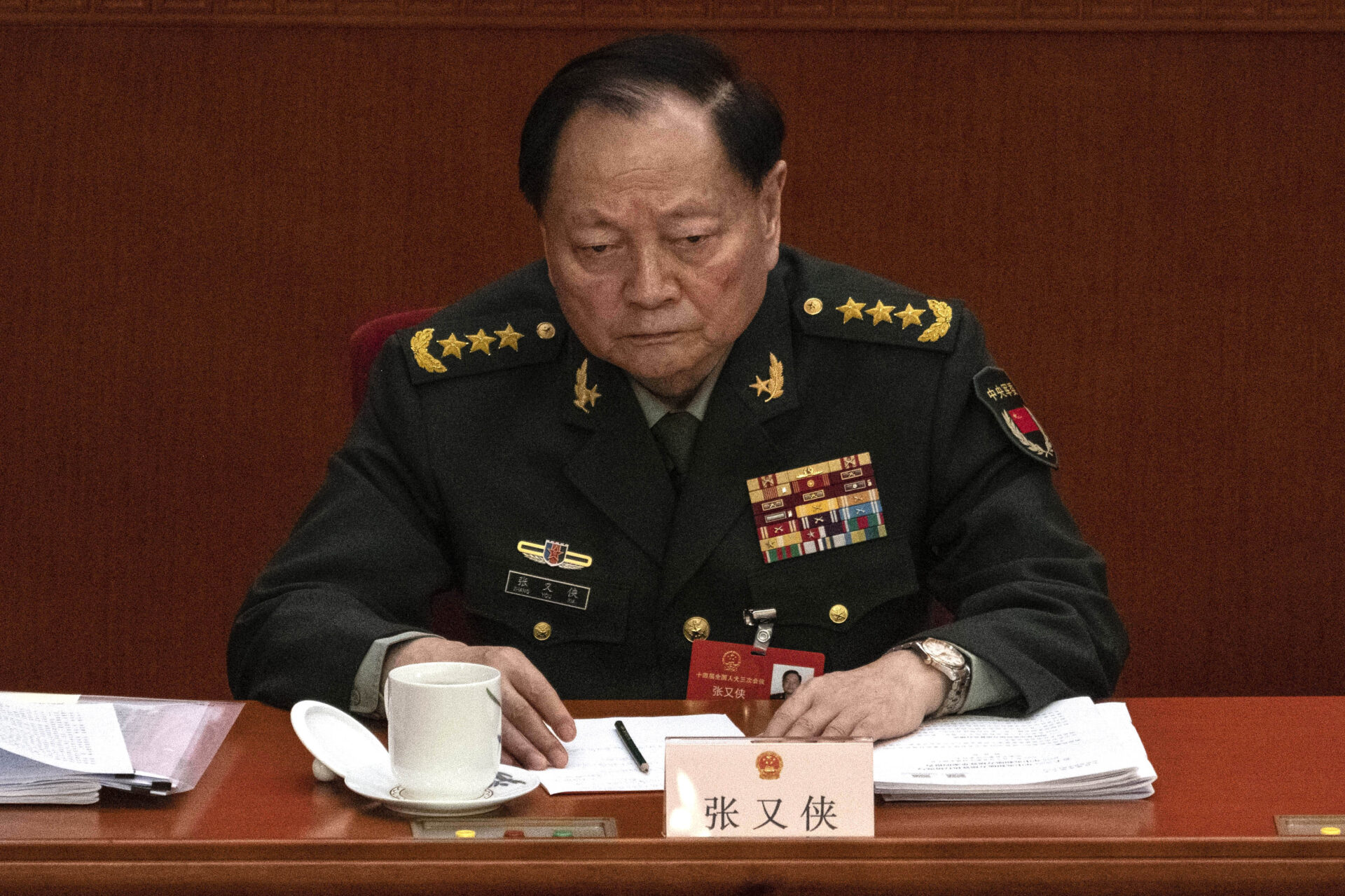
The last few months of 2025 have seen a proliferation of authoritative policy documents and commentaries discussing “new quality combat forces” (新质战斗力), a term that refers to the integration of emerging technologies with military capabilities. These include the Central Committee’s “Recommendations” (建议) for the 15th Five-Year Plan, a commentary on the plan by Central Military Commission (CMC) Vice-Chair Zhang Youxia (张又侠), and other articles in authoritative media penned by military theorists and scholars. These pronouncements provide more detailed insight into what the term means, how it relates to other concepts such as “advanced combat forces” (先进战斗力), and its increasing importance to the Party’s notion of systems confrontation. [1] They also warn against over-indexing on technological development as a marker of military modernization, warning that the People’s Liberation Army (PLA) still must improve in a number of other areas, such as cultivating personnel who are both technically competent and politically reliable.
New Quality Combat Forces Underpin Push for Intelligentized Warfare
The PLA has been discussing “new quality combat forces” for decades (FMSO Foreign Perspectives Brief, December 2024). But the concept has become much more prominent in PLA discourse following Party assessments that new and emerging technologies are beginning to significantly impact the nature of warfare. General Secretary Xi Jinping first used the phrase in January 2019 at the CMC’s military work conference, where he called for “increasing the proportion of new-type combat capabilities” (要加强新型作战力量建设,增加新质战斗力比重”) (People’s Daily, November 17). It received wider attention after the Two Sessions meetings in 2024, when Xi used it in conjunction with an analogue phrase for the economic sphere, “new quality productive forces” (新质生产力).
PLA scholars and theorists have varying definitions for “new quality combat forces.” A 2015 People’s Daily article, for instance, defines the term succinctly as a “system combat capability based on information systems” (基于信息系统的体系作战能力) (People’s Daily, November 29, 2015). A more recent definition, in a PLA Daily article from June 2024, adds a little more nuance, defining the term as a “novel form of combat capability developed through emerging technological means and operational concepts” (依托新兴科技手段和作战理念形成的一种全新战斗力) (MND, June 27, 2024). A discussion of the topic from December describes it as a “key force for winning on the future battlefield” (制胜未来战场的关键力量) (PLA Daily, December 4).
The December 4 article, coauthored by scholars at the Academy of Military Science and the Nanjing Political Academy, is one of the more detailed discussions of “new quality combat forces” to date. It frames ongoing developments in military technology in grandiose theoretical terms as the “acceleration of decision-making from ‘carbon-based’ to ‘silicon-based’” (决策加速从“碳基”向“硅基”转移), and “from ‘cell bodies’ to ‘intelligent entities’” (从“细胞体”向“智能体”让渡). It also argues that decision-making is “even evolving toward a ‘human-out-of-the-loop’ model” (乃至“人在环外”的模式演进). This evolution is based on the direction of travel “toward intelligent, unmanned, and cross-domain operations” (向智能化、无人化、超域化) and “toward long-range precision, intelligence, stealth, and unmanned operations in weaponry and equipment” (武器装备远程精确化、智能化、隐身化、无人化). This echoes a PLA Daily article from May 2024, which defined the “quality” (质) in “new quality combat forces” as referring to informatized, intelligent, and precision combat capabilities (PLA Daily, May 2, 2024). The reference to a “human-out-of-the-loop” model is also echoed in other writing on “new quality combat forces,” such as a November article arguing that AI-powered autonomous weapon systems are evolving “from ‘execution tools’ to ‘intelligent nodes’” (从“执行工具”升维成“智能节点”) (People’s Daily, November 17).
Among the technologies that PLA is prioritizing, according to military scholars, are drones, including unmanned systems of all kinds, that are “transitioning from a supporting role on past battlefields to a primary combat role” (正从过去战场配属角色向主战角色转变). Also in development are technologies that intersect with biology, such as brain science and human-machine interfaces, as well as bionic robots, and smart ammunition. And intelligent algorithms are viewed as central for decision-making, to be integrated into command chains at “every stage of the kill chain” (杀伤链的各个环节), “enabling victory before the battle begins” (实现“未战而先胜”). These novel technologies are enabling the expansion of the battlespace into the emerging frontiers of the deep sea, outer space, cyberspace, and the cognitive domain, and are leading to the development of new tactics and phenomena such as “deepfakes and information silos” (“深度伪造”“信息茧房”) (PLA Daily, December 4).
New Quality Combat Forces Key to the National Strategic System and Capabilities
A November article situates “new quality combat forces” in the context of “advanced combat forces.” The exact relationship between the two is unclear: other articles state that they essentially refer to the same thing, or that the former is representative of the latter (Party Building Research, 2024; PLA Daily, December 4). The November article instead describes new quality combat forces as “leading and supporting” (引领和支撑) advanced combat forces, and as the foundations upon which an “advanced combat capability paradigm” (先进战斗力形态) is being built. In this sense, advanced combat forces refer to a broader set of capabilities that “emphasize the leading position of new quality combat forces but also prioritize the ‘excellence’ of their effective application” (强调新质战斗力发挥主导地位,更关注新质战斗力的应用效能之“优”). This view is most evident in Zhang Youxia’s commentary, which calls for “accelerating the construction of advanced combat forces” (加快先进战斗力建设), including by “achieving substantive breakthroughs in new quality combat forces” (在新质战斗力增长极上务求实现实质突破) (People’s Daily, November 12).
In other words, the concept of advanced combat capabilities embeds “new quality combat forces” in an overarching national system. As the November article writes, the concept “shifts the focus of combat effectiveness from weaponry competition to systems confrontation” (把战斗力重心从武器比拼转向体系对抗). For the PRC, the notion that future conflict will be one between national systems entails enhancing synergies between the economic and military sphere. Xi articulated this most clearly in his address to the Two Sessions in 2024, where he called for “promoting the efficient integration and mutual reinforcement of new quality productive forces and new quality combat forces” (推动新质生产力同新质战斗力高效融合、双向拉动) (Party Members’ Net, March 7, 2024). [2] This utterance has been repeated frequently in the 20 months since, and especially in the weeks surrounding the 20th Central Committee’s fourth plenary session in October. It appeared in identical fashion in the Central Committee’s Recommendations, in Zhang Youxia’s commentary, and in commentaries by PLA scholars in Guangming Daily—a newspaper run by the Central Committee—and in PLA Daily (Guangming Daily, September 4; People’s Daily, November 12, November 17). This level of recitation indicates the importance the Party leadership attaches to the integration of economic and military strength.
Advancing this integration is central to what the Party refers to as the “national strategic system and capabilities” (NSCC; 国家战略体系和能力). The NSSC, according to analysts Liza Tobin, Addis Goldman, and Katherina Kurata, refers to “the intensification of CCP efforts to integrate all available state resources to pursue national goals and increase China’s comprehensive national power.” They also note that, in recent years, calls to “build an integrated NSSC” have largely superseded policy discourse on the planning, and implementation of military–civil fusion (MCF; 军民融合) (Frohman and Rausch eds., 2025). [3] References to “MCF” did not appear in the 14th Five-Year Plan, and do not appear in the Recommendations for the 15th either, but references to the NSSC do. In the latest document, Recommendation number 55 starts by declaring the need to “consolidate and enhance the integrated national strategic system and capabilities” (巩固提高一体化国家战略体系和能力). This phrase also appears in Zhang Youxia’s commentary. NSCC requirements in the Recommendations also include ensuring that civilian and military standards are harmonized, that “major infrastructure fully incorporates national defense requirements” (重大基础设施全面贯彻国防要求), and that unity between the military and government, as well as between the military and the people, is consolidated.
The clearest articulation of current PLA thinking on the NSSC comes in the November article in the People’s Daily. It states that “the interconnection, mutual influence, and mutual support among national strategic competitiveness, social productivity, and military combat effectiveness are becoming increasingly tight” (国家战略竞争力、社会生产力、军队战斗力三者相互关联、相互影响、相互支撑越来越紧密). As such, “new quality productive forces” are “the driving force and support for the upgrading and modernization of new quality combat forces” (为其提供了升级换代的牵引力、支撑力) and a “key variable in reshaping warfare, reconstructing operational systems, and reorganizing command elements” (重塑战争形态、重构作战体系、重组指挥要素的关键变量) (People’s Daily, November 17).
The PLA is clear that emerging technologies are crucial to military modernization, and to building a mutually reinforcing economic and military industrial system. But it is also clear that such technologies on their own are not sufficient for achieving a world-class military. Recent technological progress in the PRC has been impressive, but it is not a panacea. And some warn that overreliance on certain technologies could lead to path dependency that will be difficult to break free from (PLA Daily, December 4).
The PLA Daily has lamented long-standing “technical gaps and capability weaknesses” (技术短板、能力弱项), as well as structural challenges and systemic obstacles (PLA Daily, March 22, 2024, June 27, 2024). Zhang Youxia spent a significant portion of his commentary warning about “harmful influences and entrenched evils” (流毒积弊), as well as “two-faced individuals” (两面人). Beyond personnel issues, he also complained about “detachment from actual combat, redundant and fragmented efforts, and inefficient practices” (脱离实战、重复分散、粗放低效).
Conclusion
A tension has emerged in recent years between the PLA’s steady progress in developing novel technologies with military applications and an apparent regress in the quality of military personnel required to use them. Even at the top of the military system, 2025 has seen considerable tumult as ongoing corruption investigations have reduced the CMC to its smallest size in decades and left key positions in the Eastern Theater Command and elsewhere vacant (China Brief, October 17, November 14, November 25).
PLA scholars argue that the concept of advanced combat capabilities “transcends the logical limitations of Western combat capability generation theories” (超越了西方战斗力生成理论的逻辑局限) (People’s Daily, November 17). In 2026 and beyond, how the PLA resolves this tension will be a key indicator of whether implementing its military systems design concepts will result in superior outcomes.
Notes
[1] The phrase “新质战斗力” has no settled translation in English. Some, mirroring the common translation of “新质生产力” as “new (quality) productive forces” opt for “new (quality) combat forces.” Others prefer “new quality combat capabilities,” which is closer to the PRC government’s preferred translation, “new combat capabilities.” This article uses “new quality combat forces,” as this aligns most closely to the original Chinese.
[2] Liza Tobin and coauthors note that translating “新质生产力” as “new forces of production” better captures the Marxist origin of the term than Beijing’s official English translation, “new quality productive forces.” Liza Tobin, Addis Goldman, and Katherine Kurata. “System by Design: The Evolution of China’s Military-Civil Fusion Strategy.” in Benjamin Frohman and Jeremy Rausch eds., The PLA’s Long March toward a World-Class Military: Progress, Obstacles, and Ambitions. The National Bureau of Asian Research, 2025.
[3] Liza Tobin, Addis Goldman, and Katherine Kurata. “System by Design: The Evolution of China’s Military-Civil Fusion Strategy.” in Benjamin Frohman and Jeremy Rausch eds., The PLA’s Long March toward a World-Class Military: Progress, Obstacles, and Ambitions. The National Bureau of Asian Research, 2025.