Russia Struggling to Resist PRC Rare Earth Dominance
Russia Struggling to Resist PRC Rare Earth Dominance
Executive Summary:
- Russia is expanding domestic development of rare earth elements (REEs) as it joins global attempts to reduce dependence on REE imports and the supply chain dominance of the People’s Republic of China (PRC).
- Moscow is accelerating state-driven projects, including Mendeleev Valley REE processing cluster in Siberia, and Rosatom’s mine to magnet supply chain development, as it faces resistance from the PRC to supply its own technological capabilities to Russia.
- The Kremlin is quickly recognizing the limits of its position and that the PRC offers no preferential treatment in a sector where Beijing is attempting to maintain dominance.
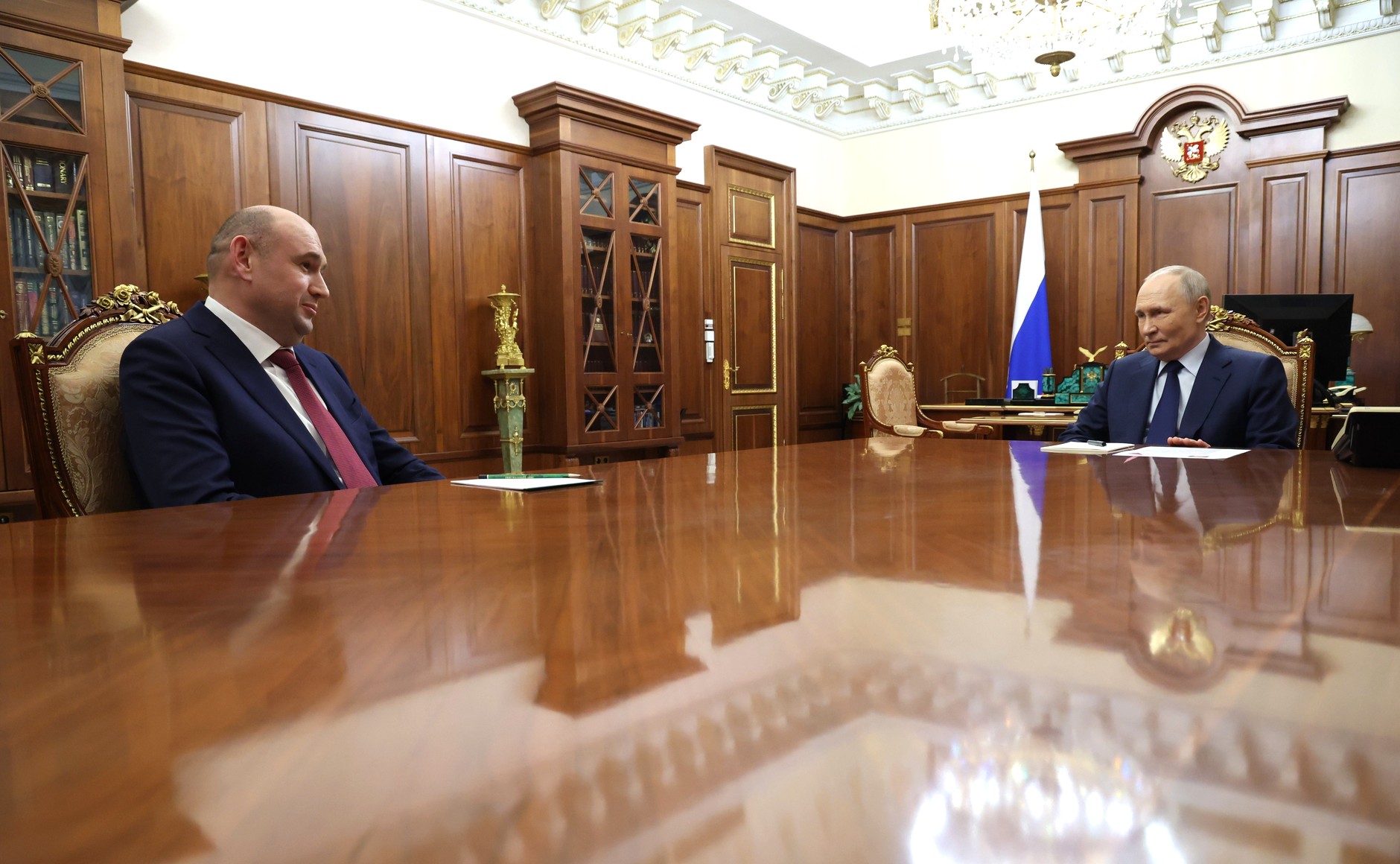
On February 2, Russian Prime Minister Mikhail Mishustin appointed Ksenia Shoigu as Chief Executive Officer (CEO) of the Development Fund of the Innovative Scientific and Technological Center, referred to as Mendeleev Valley (Долина Менделеева, Dolyna Mendeleyeva) (Government of Russia, February 2). Shoigu is the daughter of Sergei Shoigu, secretary of the Russian Security Council and former defense minister, who originally proposed the creation of scientific, industrial, and economic centers in Siberia, now known as “Siberianization” (Сибиризации, Sibirizatsii) (Vedomosti, August 9, 2021; see EDM, February 5). One priority for Mendeleev Valley is to advance technology for the production of rare earth elements (REEs) in Siberia, following Russian President Vladimir Putin’s November 2025 order to the Cabinet of Ministers to approve a national roadmap for rare earth mining and refining (see EDM, December 5). This represents an important step in Moscow’s efforts to build a domestic REE production chain for long‑term economic resilience in a market dominated by the People’s Republic of China (PRC).
Russia remains dependent on REE imports from the PRC. The Russian government shares Western states’ resolve to decrease this dependency by increasing its domestic capabilities. Putin has said that Russia is doing little to extract its REE reserves and that it needs to do more (TASS, February 24, 2025). Russia imports 90 percent of its REE supply from abroad, most of which is assumed to come from the PRC (official data on import origins is not publicly available) (Nezavisimaia Gazeta, July 29, 2024). Moscow aims to reduce Russian dependence on imported raw materials by 2030 and accelerate REE production to 3,000 tons annually (TASS, July 2, 2025; see EDM, December 5, 2025). Moscow claims it can achieve this because the country’s domestic reserves are sufficient to meet the economy’s current and long-term needs (TASS, February 25, 2025). Toward this aim, the Russian Ministry of Industry and Trade recently proposed a 35 percent subsidy for Russian REE producers to improve the competitiveness of domestic REE products compared to imported ones (Kommersant; TASS, February 9). Among such organizations is Russia’s state-owned nuclear corporation Rosatom, which is developing proprietary REE extraction technologies (Strana Rosatom, February 28, 2024; TASS, July 2, 2025). Rosatom is attempting to build an end-to-end REE production and supply chain, from mine to magnet (Rosatom, April 2024). The corporation is also involved in Shoigu’s Mendeleev Valley project as a scientific and technological partner (Rosatom, December 4, 2025, January 30).
Moscow appears desperate not to get left behind in the pace of global REE development. Unlike other countries, however, Russia has not publicly criticized the PRC’s monopoly on REEs as it pursues new domestic mining, processing, and refining capabilities. Russia could potentially compete with the PRC in REE mining, as it claims to hold the world’s second-largest REE reserves, which includes reserves of 15 rare-earth metals totaling 28.5 million tons, according to the government’s latest figures (The Moscow Times, November 4, 2025).[1] To sufficiently challenge this position, Russia would also need to present processing and refining capabilities on par with the PRC, in addition to mining. Latest figures show that the PRC maintains 59 percent of global REE mining, 91 percent of global REE refining, and 94 percent of global REE magnet manufacturing (International Energy Agency, October 23, 2025).
Beijing is not making it easy for Russia to catch up. It is instead intensifying its push to secure every link in the critical mineral value chain through regulation, enforcement, and upstream development to defend core national interests (see China Brief, May 23, 2025). It has avoided supporting REE development in Russia, despite Moscow reportedly attempting, unsuccessfully, to acquire REE extraction and processing technology from the PRC. Russian First Deputy Prime Minister Denis Manturov recently said that Russia has been in negotiations with the PRC and is exploring potential participation in REE development with PRC counterparts, but that no final decisions have been made (Interfax; RBC, September 8, 2025). The PRC also prohibits exporting REE separation and refining technology, even to its partners (see China Brief, October 17, 2025). Recent PRC export control measures on seven REEs, in response to U.S. tariffs, adversely affected the global REE market and restricted Russia’s ability to import the technology it requires to implement its REE development goals (RIA Novosti, October 9, 2024).
There is little evidence to suggest that Moscow seeks to challenge the PRC internationally. The only real mention of this was in an empty negotiation tactic toward the United States over Russia’s war against Ukraine. In 2025, Putin claimed that Moscow would be willing to collaborate with the United States on rare-earth development initiatives within Russia (RIA Novosti; TASS, February 24, 2025). Putin made this offer when the United States expressed interest in collaborating instead with Ukraine on what later became the long-anticipated U.S.–Ukraine critical minerals deal (Government of Ukraine, April 30, 2025; see Strategic Snapshot, May 1, 2025).
As Moscow’s concerns are largely centered on the domestic chokehold Beijing has over the Russian economy due to its reliance on REE imports, its most viable alternative options are in Central Asia (RIA Novosti, November 12, 2025). Kazakhstan and Uzbekistan, in particular, are seeking to become essential players in the global REE mining sector and to address global dependence on the PRC (see EDM, June 12, 13, 2024, February 11, 2025; Kazinform, February 5). Both Kazakhstan and Uzbekistan, however, have sought partnership with the PRC, the United States, and Japan rather than further integration with Russia (see EDM, July 1, 2024, April 3, 2025, January 26). Most recently, delegations from Kazakhstan and Uzbekistan joined other international partners in Washington to build secure and resilient critical minerals supply chains at the U.S.-hosted Critical Minerals Summit (U.S. Department of State, February 4). These developments further restrict Moscow’s options for reducing its reliance on the PRC and challenge Russia’s long-standing economic hegemony in Central Asia (see EDM, November 20, 2025, January 28).
Moscow is quickly realizing that it is nothing special to Beijing. The PRC offers no favors when it comes to protecting its most competitive and advantageous asset in the current geopolitical landscape. Maintaining supply chain dominance in a sector so intertwined with national security, critical infrastructure, and daily technological necessities matters more to Beijing than keeping Moscow in good favor. Russia is becoming increasingly expendable, desperate, and empty-handed, with no special favors heading its way anytime soon.
Note:
[1] These are samarium, lutetium, dysprosium, holmium, erbium, praseodymium, thulium, lanthanum, cerium, ytterbium, terbium, neodymium, gadolinium, europium, and promethium (plus yttrium). Russia’s claim that it holds 28.5 million tons of REE reserves is difficult to verify, given access restrictions from outside of Russia. Some reports claim that Brazil is ranked second, with 21 million tons of REEs reserves, rather than Russia.