Russia’s Hope for Trans-Atlantic Rift at MSC Disappointed
Russia’s Hope for Trans-Atlantic Rift at MSC Disappointed
Executive Summary:
- Russia hoped the February 13–15 Munich Security Conference (MSC) would expose rifts between the United States and Europe through disputes over approaches to nuclear arms, Arctic security, and Ukraine. U.S. Secretary of State Marco Rubio instead reaffirmed Washington’s commitment to European security, reinforcing trans-Atlantic unity.
- Russian media speculated that New START’s expiration and contention over Greenland would cast a shadow over the MSC. Discussions in Munich largely downplayed these issues, and the United Kingdom highlighted NATO solidarity through joint Arctic naval deployments.
- Russia did not try to demonstrate its military might to the dignitaries conferencing in Munich, bucking the Kremlin’s pattern of upping military pressure on Ukraine on the eve of peace talks. The lack of a new Russian offensive push is likely because of the depletion of troops from heavy casualties during the winter campaign.
Russia hopes to drive a wedge between the United States and Europe through hybrid attacks and nuclear brinkmanship to increase its chances of prevailing against Ukraine. The Kremlin expected the February 13–15 Munich Security Conference (MSC) to trigger a new surge in tensions between the United States and the European Union. Mainstream Russian commentary ahead of the conference assumed that EU leaders would critique U.S. policy (Rossiiskaya Gazeta, February 11). The main message from the MSC, however, was about reconfiguring and reinforcing the trans-Atlantic unity, and U.S. Secretary of State Marco Rubio elaborately asserted the United States’ commitment to European security (RIA Novosti, February 14). The conference often brings surprises, including Russian President Vladimir Putin’s address in 2007, which strongly criticized the United States and the North Atlantic Treaty Organization (NATO) and marked a turning point in Russia–West relations. Rubio’s speech delivered another surprise, albeit of a very different nature than the Kremlin hoped (RBC, February 14).
The Kremlin believed that the expiration of the U.S.–Russian New Strategic Arms Reduction Treaty (New START) would cast a shadow over the conference (Radio Svoboda, February 12). Russian pundits were eager to speculate about greater risks of a new nuclear arms race, but Rubio ignored this matter altogether (Kommersant, February 4; TopWar.ru, February 12). The Kremlin still hopes to engage the U.S. government in protracted and self-serving talks on strategic stability, but Russian nuclear threats mostly target Europe (RIAC, February 9). Moscow intended its January 9 Oreshnik strike on an aircraft repair plant in Lviv to stoke European doubts about the reliability of the U.S. nuclear guarantees (see EDM, January 13; The Insider, February 10). Pro-Kremlin media have amplified every rumor about Europe considering developing an independent nuclear deterrent capability, but U.K. Prime Minister Keir Starmer’s statement about the expansion of the U.K.–French cooperation in nuclear strategy was the only such signal from Munich (Izvestiya, February 13; Kommersant, February 14).
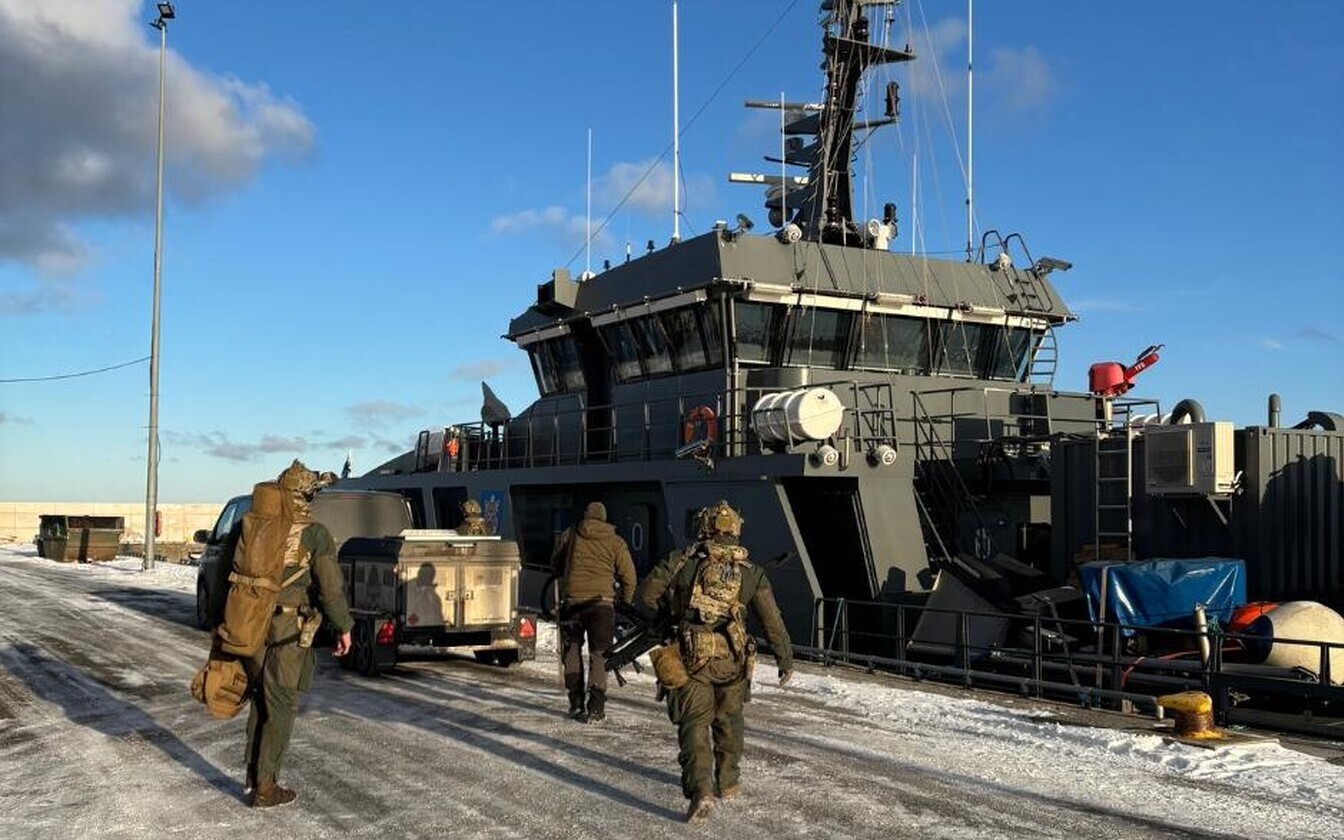
Moscow also viewed Arctic security, particularly arguments over Greenland, as a potential source of division within NATO during Munich (Forbes.ru, January 23; Kommersant, February 13). Russian commentators interpreted French President Emmanuel Macron’s warning about the fragility of the partial solution on Greenland negotiated by NATO Secretary General Mark Rutte at the Davos Forum in January as evidence of a deep chasm between the United States and the European Union (RBC, February 10; Nezavisimaya Gazeta, February 11). The United States and European Union carefully downplayed the Greenland question in Munich. Starmer made the most prominent point about Arctic security by announcing the United Kingdom’s forthcoming deployment of its aircraft carrier HMS Prince of Wales for NATO patrols in the Northern Atlantic (Vedomosti, February 14). Moscow’s ability to project power from its naval “bastion” in the Eastern part of the Barents Sea along the coast of Norway and into the Northern Sea is limited to a few nuclear submarines as Russia’s Northern Fleet struggles to keep its major surface combatants operational (Izvestiya, February 13).
The degree of Western unity in supporting Ukraine is the most important matter for Russia in the Munich discussions. Moscow can hardly find comfort in Rubio’s discourse on the broad, civilizational foundation of the U.S.–Europe alliance (Meduza, February 14). Rubio was succinct on the topic of peace talks that are set to continue in Geneva, confirming that U.S. negotiators will keep testing Putin’s readiness to bring the war to an end (Nastoyashee Vremya, February 13). Nothing in Rubio’s remarks confirmed the existence of the “spirit of Anchorage,” which Russian authorities try to conjure to imply an understanding between Putin and U.S. President Donald Trump to pressure Ukraine to make concessions (Rossiiskaya Gazeta, February 10; Meduza, February 11). European preparations for deploying forces of the “coalition of the willing” as a part of security guarantees for Ukraine are decried in Moscow as attempts to poison this mythical “spirit of Anchorage” (Rossiiskaya Gazeta, February 10; RBC, February 11).
Russia did not try to demonstrate its military might to the dignitaries conferencing in Munich by executing a series of massive missile strikes on Kyiv or by attempting a stronger push in the Donbas “kill-zone” (Nezavisimaya Gazeta, February 10). This passivity does not fit the Kremlin’s pattern of upping military pressure on the eve of peace talks and may indicate an attempt to build reserves for a new spring–summer offensive (The Insider, February 13). More probably, however, the lack of a new Russian push in the Donbas is because of the depletion of “storm” units from heavy casualties during the winter campaign, when severe cold turned light wounds into fatalities (Novaya Gazeta Evropa, February 11).
Russia’s capacity to replace these casualties by recruiting 35,000–40,000 new soldiers per month is increasingly uncertain. Only extra-high signing bonuses can stimulate middle-aged men to sign military contracts, as expanding cemeteries illustrate the probability of death at the front (Carnegie Politika, February 10). In Moscow’s war of attrition against Ukraine, the cost of recruitment driven by signing bonuses is a heavy addition to the financial crisis, which affects Russia’s poorest regions the hardest (Re: Russia, February 13). The Kremlin has revised its forecasts of economic stagnation downwards as oil export revenues are squeezed by U.S. pressure and EU sanctions (The Moscow Times; The Bell, February 13).
This degradation of the Russian economy generates strong disincentives for potential investors. Whatever proposals for joint projects Putin’s special envoy Kirill Dmitriev may bring to the side rooms of the Geneva talks, their shrinking margins of profits translate into diminishing political leverage (Vedomosti, February 13). The volume of resources that the European Union earmarks for reconstruction of Ukraine, in addition to current military and financial support, guarantees a very different short- and mid-term environment for investors. Putin may cherish hopes for a personal rapport with Trump underpinned by lucrative opportunities, but his obsession with subjugating Ukraine erases the space for compromises necessary for a peace deal and for doing business. Trans-Atlantic unity, re-energized in Munich, reduces Putin’s chance of diplomatic victory, perhaps even more disastrous for Russia than the plan to conquer Kyiv by the end of February 2022.