Russian National Unity Day Extolls the Cossacks
Executive Summary:
- Russian National Unity Day, celebrated on November 4, has undergone significant ideational changes since its revival in 2005.
- Since Russia’s full-scale invasion of Ukraine in 2022, the Kremlin has elevated its own loyal nationalist group, the Russian Cossacks, positioning them as a “faithful support of Russia” and a “human shield of the Orthodox faith.”
- Russian National Unity now promotes a new state ideology, with paramilitary Cossacks celebrated by religious, political, and cultural leaders as a “spiritual spetsnaz” symbolizing a militaristic, holy patriotism rallied around Russian President Vladimir Putin.
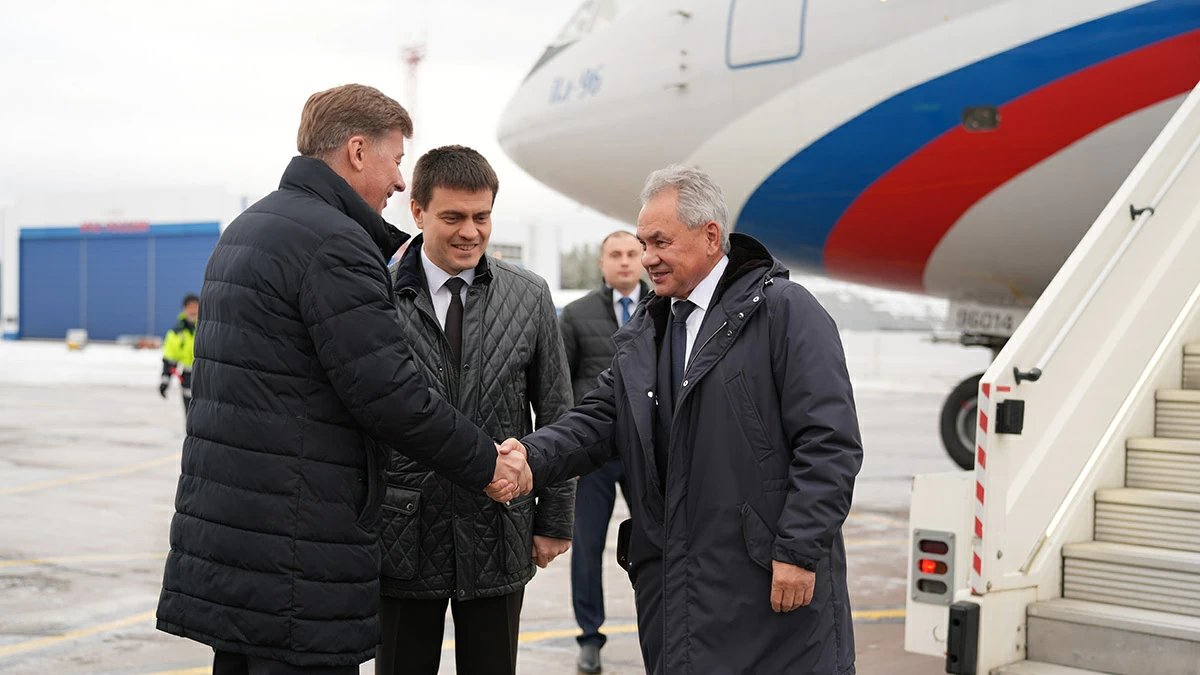
November 4 marked the 20th anniversary of Russian National Unity Day, and the manner in which the government celebrated it speaks volumes about the country’s future (Lenta.ru, November 4). The holiday is close to the symbolic date of the Bolshevik Revolution, but has been used by the current government to promote a different kind of ideology. The religious significance of the holiday, its coincidence with the 2018 founding of the all-Russian national Cossack movement, as well as the regime sending specific messages to Cossacks, are all consistent with Russian political scientist Sergei Karaganov’s view of Russians as a “God-bearing people” with “Russia as the new Israel” (Higher School of Economics, June 2025). The combined religious and national significance of the holiday was acknowledged by the church this year, which published an article reporting on Patriarch Kirill’s celebration of the “divine liturgy” at a Kremlin cathedral (Russian Orthodox Church, November 4). This framing holiday is another example of Moscow’s mythologization of cultural symbols such as the Cossacks to promote its militaristic goals (see EDM, September 9, 2014, January 30, July 16).
The ostensible purpose of the holiday’s founding was to celebrate the anniversary of the liberation of Moscow by Dmitry Pozharsky and Kuzma Minin in 1612, marking the revival of a practice established by Tsar Alexei Mikhailovich in 1649, when he declared November 4 a church holiday (Lenta.ru, November 4). The probable cause for its modern resurgence, however, was the 2004 Orange Revolution in Ukraine, which prompted the Kremlin to sponsor various “patriotic” movements, such as the infamous youth group Nashi (openDemocracy, August 30, 2007). Over time, Russian National Unity Day was commandeered by the right-wing opposition of skinheads, liberals, oppositionists, and neo-Nazis who tried to subvert the holiday into a protest against Russian President Vladimir Putin through the so-called “Russian March,” before the marches were finally repressed just before the pandemic (see EDM, November 1, 2013; November 9, 2015; November 6, 2017; November 24, 2020; Gazeta.ru, November 4). With its leaders imprisoned or in exile, the chances of a renewed right-wing attempt to co-opt the holiday are minimal. There have been no significant attempts by the nationalist opposition to do so since the war began.
These chances are further diminished by the Kremlin’s co-optation of its own tame nationalist movement, the Russian Cossacks, who combine hostility to foreigners with loyalty to the regime. In recognition of this, Patriarch Kirill of Stavropol and Nevinnomyssk sent an open letter to the Ataman of the all-Russian Cossack society, Vitaly Kuznetsov, on the “day of the Kazan icon of the Mother of God, the day of national unity, and the day of the founding of the all-Russian Cossack society.” In the letter, he described the Cossacks as having “always been a faithful support of Russia, a human shield of the Orthodox faith” (Synodal Committee of the Russian Orthodox Church for Cooperation with the Cossacks, November 4). The All-Russian Cossack Society was established in 2018 and, in hindsight, telegraphed preparations for a broader conflict in Eurasia by preparing children for the coming sacrifices and struggles that would be required (see EDM, October 17, 2022, February 27, 2024, October 30).
Articles on the All-Russian Cossack Society’s website further recognize the centrality of the Cossacks to Russian National Unity Day. One singer from the male-voice choir Russian Format described the role the Cossacks play in modern Russia by citing a song, which says, “Where there is a Cossack, there is truth and God,” continuing, “Where there are Cossacks, there is a real Russian spirit, there are real Russian soldiers. There is truth, there is strength, there is all our Russia.” Similarly, actor Ivan Okhlobyistin referred to the Soviet era, saying, “Even when the Cossacks were repressed for decades, they still maintained their culture … And now how they show themselves at the front!” Finally, the lead singer of the music group “Agatha Christie,” Vadim Samoilov, referred to the Cossacks as “the military and spiritual spetsnaz of Russia” (VsKO, November 4). Other interview subjects expressed similar sentiments, including the director of the Russian State Academic Theater and member of the Presidential Council on Cossack Affairs, Nadezhda Babkina, who said, “Cossacks are absolutely spiritually free people … First off, they are believers … today they help people rally together—and this is the most powerful force” (VsKO, November 4). As avatars of the Kremlin’s new ideology, the Cossacks play an important role in the state’s promotion of Russian militarism.
For his part, Kuznetsov wrote an open letter congratulating the Cossacks on Russian National Unity Day. In it, he claimed that “the unity of the Russian Cossacks is of particular importance on this day, from Kaliningrad to the Far East.” Going on to describe the Cossacks as an “indestructible brotherhood,” he extolled the virtues of the Cossacks as epitomizing many of the values which the new ideology claims to celebrate—resilience, steadfastness, and holy patriotism (VsKO, November 4). Underlining their proximity to the power structures, a letter from the presidential plenipotentiary to the North-West Caucasus Federal District, Yuri Chaika, also congratulates the Cossacks on the occasion, claiming:
Four centuries ago, thanks to cohesion and sincere deep love of the Motherland, which has not faded, our ancestors did not allow the state to lost its sovereignty… today, having once more rallied around President Putin we have once again proved to the world that Russia’s strength lies in the unity of its multi-ethnic people, respect for the common past, and desire to serve the Fatherland” (VsKO, November 4d).
Cossacks, in other words, symbolize Russia’s positive attributes.
As the new Russian ideology continues to gain ground, sacralized times such as Russian National Day construct new roles for paramilitary groups such as the Cossacks (see EDM, October 14, 30). The Kremlin’s attempt to co-opt authentic Cossack traditions and supplement them with fabricated ones is further evident in the scant attention paid to the ancestral Cossack holiday of Pokrova on October 14, when only a single article was published (VsKO, October 14). This is yet another reminder of how important the Kremlin’s version of the Cossacks is becoming to the regime.